Portable Tire Inflator Guide: What to Look for in a Car Air Pump
How to choose a portable tire inflator: power source, speed, auto shutoff and using it correctly.
 By Diagnostics & Garage Desk
Updated October 3, 2026
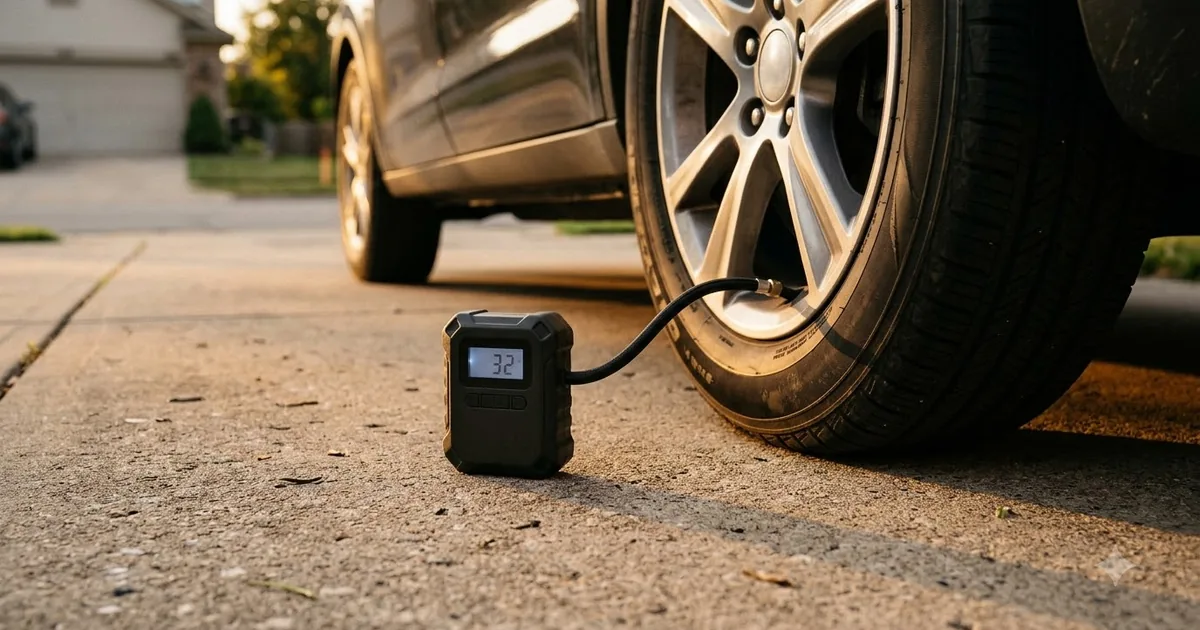
A portable tire inflator keeps a small air compressor in your car so you can top up a low tire without finding a gas station. This guide covers the main types and what to check before you buy.
This guide is based on published specifications, manufacturer information and buyer feedback. We do not claim hands-on testing. Always follow your vehicle manual and local laws.
Types of portable inflator
| Type | Pros | Cons |
|---|---|---|
| 12V plug-in | Does not run out of battery; a good value | Needs the car socket; cable length matters |
| Cordless (rechargeable) | Easy to use and store | Limited run time; needs charging |
| Jump starter with compressor | Two tools in one | Heavier; compressor is usually slower |
| Heavy-duty compressor | Faster for truck and SUV tires | Bulkier; often needs direct battery clamps |
What to look for
- Maximum pressure: most passenger car tires need 30 to 40 PSI, so a unit rated well above that is enough. Heavy trucks need more.
- Auto shut-off: set the target pressure and the unit stops by itself.
- Accuracy: built-in gauges can be off; verify with a separate gauge when it matters.
- Duty cycle: small compressors overheat if run too long. Check the recommended running time.
- Hose and cable length: make sure it reaches all four tires.
- Nozzle type: screw-on connectors hold more securely than push-on ones.
- Light and display: handy at night.
Set the right pressure
The correct pressure is on a sticker in the driver’s door jamb or in the owner’s manual, not on the tire sidewall. Inflate when the tires are cold for the most accurate reading. See how to inflate a tire for a step-by-step guide.
TPMS and inflators
If your car’s tire pressure warning light comes on, an inflator is the first tool to reach for. A low light can also signal a slow leak, so check the tire for punctures. A tire pressure monitoring system helps you notice problems early.
Tips for use
- Run the car engine when using a 12V plug-in compressor to avoid draining the battery.
- Do not exceed the maximum PSI on the tire sidewall.
- Let the pump cool between tires if it gets hot.
- Keep it in the trunk with the cable coiled and the nozzle protected.
Frequently asked questions
How long does it take to fill a tire?
A few minutes for topping up; longer from flat. Larger tires take more time and put more strain on small pumps.
Can an inflator fix a flat?
It can temporarily re-inflate a slow leak, but a puncture needs a proper repair.
Cordless or plug-in?
Cordless is convenient if you charge it regularly. Plug-in is more dependable for an emergency kit.
Can I inflate bike tires or sports balls too?
Most come with adapters for those. Check that the unit’s pressure range suits them.
Popular buying guides
About the author
The Diagnostics & Garage Desk covers OBD2 scanners, jump starters, battery chargers and tire inflators. We explain what each tool is designed for and how to match it to your vehicle, and we always point readers to the manufacturer instructions for safe use.