How to Inflate a Tire and Check the Correct Pressure
Correct tire pressure improves safety, handling, fuel economy and tire life. Checking and inflating takes about five minutes. Here is...
 By Diagnostics & Garage Desk
Updated October 3, 2026
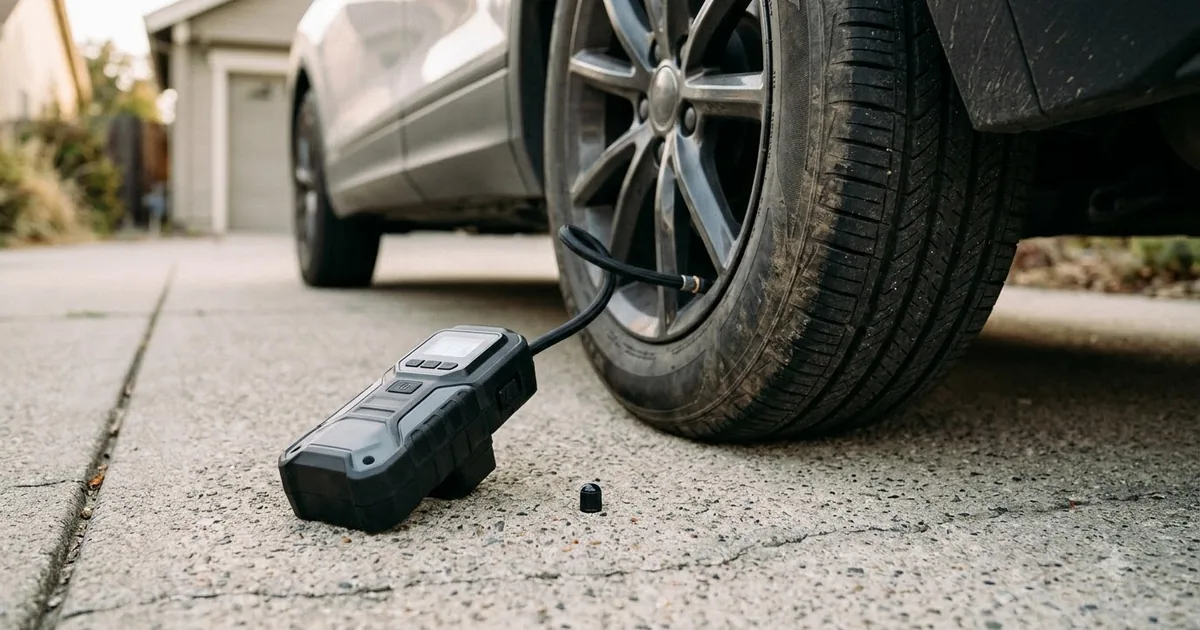
Correct tire pressure improves safety, handling, fuel economy and tire life. Checking and inflating takes about five minutes. Here is how to do it properly.
This guide is based on published specifications, manufacturer information and buyer feedback. We do not claim hands-on testing. Always follow your vehicle manual and local laws.
Find the correct pressure
Use the pressure recommended by the vehicle maker, not the maximum number moulded into the tire sidewall. It is on a sticker in the driver’s door jamb and in the owner’s manual. Front and rear tires can have different values, and the figure may change with load.
What you need
- A tire pressure gauge (digital or dial) that you trust.
- An air source: a gas-station pump or a portable inflator.
- A pen or phone to note readings.
Step by step
- Check when the tires are cold. Cold means the car has been parked for at least a few hours or driven less than a couple of kilometres.
- Remove the valve cap and keep it somewhere safe.
- Press the gauge on the valve firmly and note the reading.
- Add air in short bursts and re-check. If you overshoot, press the small pin in the valve centre to release air.
- Refit the cap to keep dirt out of the valve.
- Repeat for all four tires and the spare if your car has one.
How often to check
Once a month and before long trips. Tires lose a little pressure naturally, and pressure drops in cold weather, roughly 1 PSI for every 10 degrees Fahrenheit (about 5 to 6 degrees Celsius).
| Problem | Result |
|---|---|
| Under-inflated | More wear on the edges, worse fuel economy, longer braking, higher risk of overheating |
| Over-inflated | Centre wear, harsher ride, less grip |
The warning light
If your tire pressure warning light comes on, check all four tires. If one keeps losing air, it may have a puncture or a leaking valve. Cold snaps often trigger the light; inflating to the right pressure usually resets it after a short drive.
Frequently asked questions
Do I use the sidewall number?
No. That is the maximum the tire can hold, not the recommended pressure for your car.
Should I check pressure after driving?
Warm tires read higher. Check cold if possible. If you must inflate when warm, add a little extra and re-check once the tires cool.
Does the spare need air?
Yes, and many people forget. Check it every few months.
Can I use nitrogen?
It is fine but not needed for normal driving. Regular air is mostly nitrogen already, and correct pressure matters more.
Popular buying guides
About the author
The Diagnostics & Garage Desk covers OBD2 scanners, jump starters, battery chargers and tire inflators. We explain what each tool is designed for and how to match it to your vehicle, and we always point readers to the manufacturer instructions for safe use.