OBD2 Scanner Buying Guide: Code Readers vs Bluetooth Scanners
What an OBD2 scanner does, how code readers and Bluetooth dongles differ, and what to check before buying.
 By Diagnostics & Garage Desk
Updated October 3, 2026
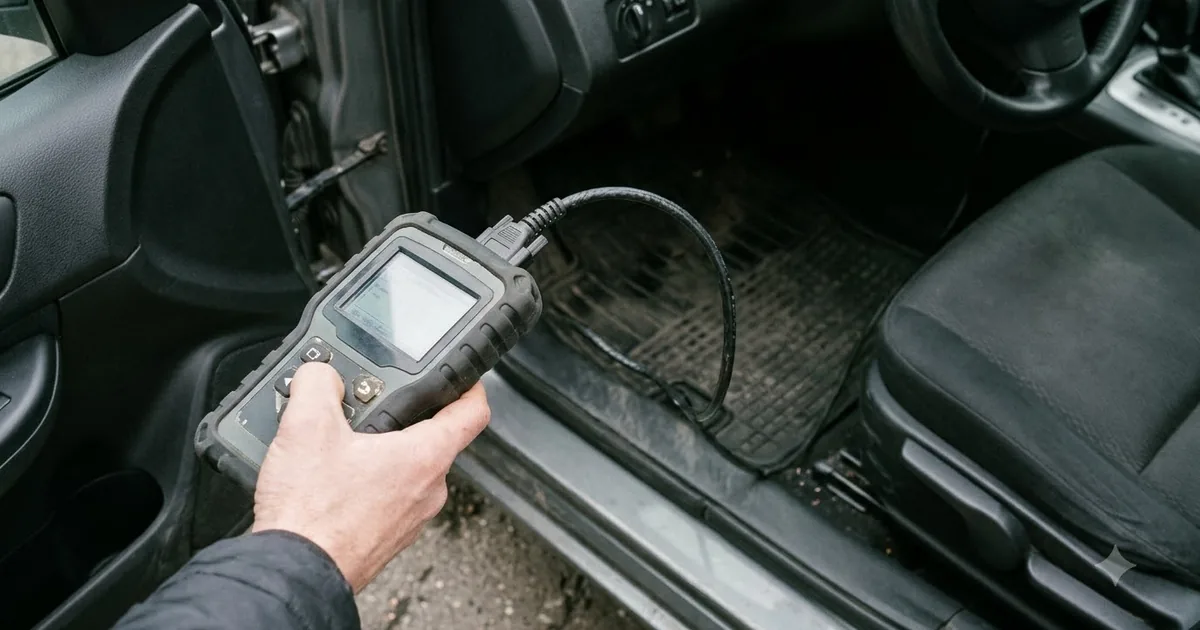
An OBD2 scanner reads trouble codes from your car so you know why the check engine light is on. Cheap code readers and app-based Bluetooth scanners both do this, but they differ in features and ease of use.
This guide is based on published specifications, manufacturer information and buyer feedback. We do not claim hands-on testing. Always follow your vehicle manual and local laws.
What an OBD2 scanner does
Since the mid-1990s in the US, cars have an OBD2 port, usually under the dashboard on the driver’s side. A scanner plugs into it and reads diagnostic trouble codes (DTCs), such as P0300 for random misfires. Many scanners also show live data like coolant temperature, fuel trims and oxygen sensor readings, and let you clear codes after a repair.
Types of scanner
| Type | Best for | Trade-off |
|---|---|---|
| Basic code reader | Quickly reading and clearing engine codes | Limited data, no app features |
| Bluetooth or Wi-Fi dongle with app | Live data, graphs and detailed reports on your phone | Depends on the app; some features need a subscription |
| Handheld scan tool | Mechanics and enthusiasts | Costs more; extra functions may be more than most drivers need |
Features to compare
- Vehicle coverage: confirm support for your make, model and year.
- Code coverage: engine codes are standard; ABS, airbag and transmission codes need a scanner that supports them.
- Live data and freeze frame: helpful for tracking down intermittent faults.
- Smog readiness (I/M) check: shows whether the car is ready for an emissions test.
- App quality: read recent reviews of the app, since it determines the experience of Bluetooth scanners.
- Updates and support: choose a maker that keeps the app or firmware current.
What a scanner cannot do
A code points to a system, not always to a part. A misfire code can come from a spark plug, a coil, a vacuum leak or fuel delivery. Use the code as a starting point and research the fix, or ask a mechanic. Clearing a code does not repair the fault, and it will usually return if the cause is still there.
Basic use
With the engine off, plug the scanner into the port, turn the ignition on, and follow the prompts to read codes. Write down the codes and the freeze-frame data before clearing anything. Our guide on how to use an OBD2 scanner covers the steps.
Safety tips
- Do not leave a cheap Bluetooth dongle plugged in for weeks if it is known to draw current.
- Do not drive while looking at a scanner screen.
- Be careful with settings that change car behaviour unless you know what they do.
Frequently asked questions
Will a scanner work on my car?
Most cars made since 1996 in the US have OBD2. Check the scanner’s list for your brand, especially for features beyond basic engine codes.
Is a Bluetooth scanner better than a handheld one?
It depends. Bluetooth scanners offer more data for the price if you are comfortable using a phone app. Handheld readers are simple and need no app.
Can a scanner damage my car?
Reading codes is safe. Poorly made devices can cause electrical issues, so buy from a reputable maker.
Should I clear the code myself?
Only after you have found and fixed the cause. Clearing it first can also reset emissions monitors, which may cause a failed test.
Popular buying guides
About the author
The Diagnostics & Garage Desk covers OBD2 scanners, jump starters, battery chargers and tire inflators. We explain what each tool is designed for and how to match it to your vehicle, and we always point readers to the manufacturer instructions for safe use.