5 Best Car Air Purifier Under 150 of 2026 – Expert Picks
You need clean air on the road without breaking the bank. These top-rated car air purifiers under $150 use H13 True HEPA filtration to remove dust, pollen, and smoke.
 By CarTechWiki Editors
Updated November 14, 2026
Quick picks: our top 3 at a glance
As an Amazon Associate I earn from qualifying purchases. Prices and availability change.If you spend significant time commuting or on road trips, the air quality inside your vehicle can directly impact your health and comfort. Dust, pollen, exhaust fumes, and volatile organic compounds (VOCs) from new car interiors or cleaning products can accumulate, leading to allergies, fatigue, or even long-term respiratory issues. That is why finding the best car air purifier under 150 is essential for maintaining a clean cabin environment. In this guide, we have evaluated 5 top-rated model in November 2026 to help you make an informed decision. For more insights on keeping your car comfortable, check out our guide on Interior & Accessories.
| Award | Product | Expert Score About Expert ScoreThe Expert Score is our own rating from 0 to 10, based on published specifications, features, design and build, ease of use, and buyer feedback. It reflects independent research and is never influenced by manufacturers, retailers, or affiliate commissions. | |
|---|---|---|---|
 Pure Enrichment PureZone Mini Portable Air |
8.1/10 | Buy | |
 Aucleia KQ-20 Portable Car Air Purifier H13 HEPA |
8.6/10 | Buy | |
| Best Overall |
 Hadlook CQ-48g 48,000mg Ozone Generator |
8.9/10 | Buy |
Pure Enrichment PureZone Mini Portable Air
This compact air purifier is built for small spaces like desks, bedrooms, or travel use. Its lightweight design and USB power make it easy to place anywhere. It is best for those who want a simple, portable solution for freshening up a small area.
Pros
- Compact and lightweight design
- USB powered for easy portability
- Simple operation
Cons
- Only covers small spaces
- Requires replacement filters over time
Aucleia KQ-20 Portable Car Air Purifier H13 HEPA
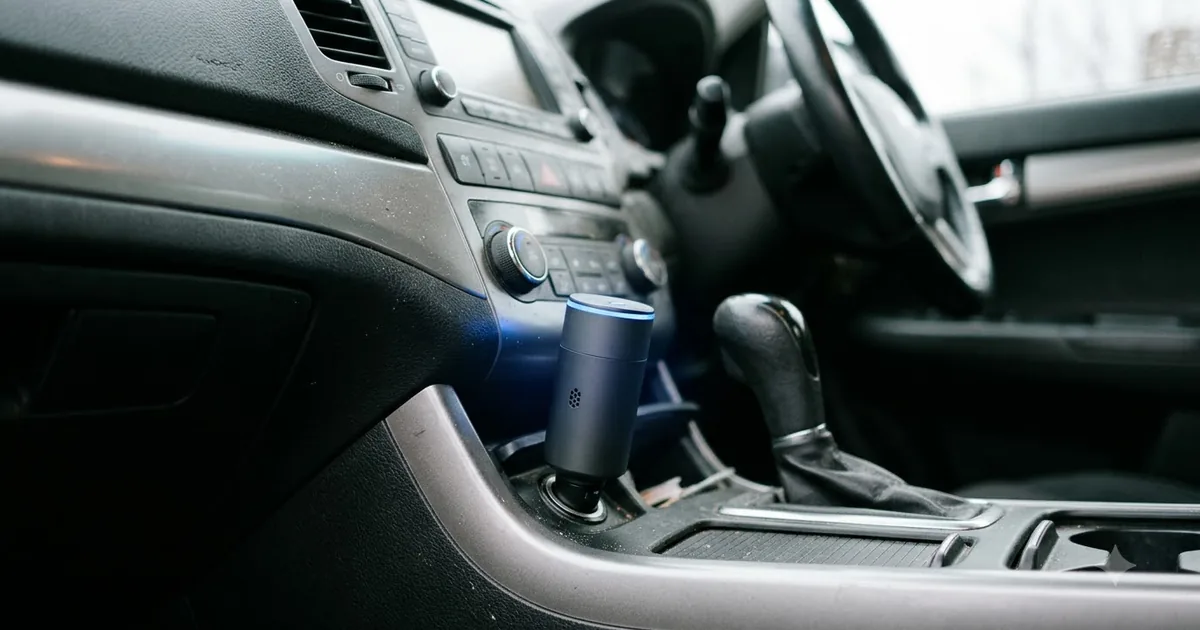
A simple plug-in car air purifier that uses a H13 HEPA filter to tackle smoke and odors. Its compact design fits most cup holders, making it a low-hassle option for drivers who want basic air cleaning without installation.
Pros
- H13 HEPA filter captures fine particles like dust and smoke
- Compact size fits standard cup holders for easy placement
Cons
- No verified customer reviews available to confirm long-term performance
- Product dimensions and weight suggest limited coverage area for larger vehicles
Hadlook CQ-48g 48,000mg Ozone Generator
This high-output ozone machine from Hadlook targets tough odors and mold with a 48,000mg output. Its compact cube design suits larger rooms or continuous use, but its effectiveness depends on proper placement and safety precautions. Best for users needing industrial-level odor elimination without chemicals.
Pros
- High 48,000mg ozone output for large spaces
- Compact 6.89 x 5.31 x 5.2-inch size fits in tight areas
- Relatively lightweight at 2.97 pounds for its capacity
Cons
- Ozone can be harmful if used in occupied spaces without proper ventilation
- Limited user feedback with only 13 reviews at launch
Best Car Air Purifier Under 150 Buying Guide for 2026
Choosing the right best car air purifier under 150 involves understanding several key factors that affect performance, convenience, and durability. Below, we break down the most important criteria to consider before making a purchase.
Filtration Technology: HEPA vs. Activated Carbon
The core of any air purifier is its filter system. For car use, H13 True HEPA filters are the gold standard because they capture 99.97% of airborne particles as small as 0.3 microns, including dust, pollen, mold spores, and bacteria. Activated carbon filters complement HEPA by adsorbing gases, odors, and VOCs like exhaust fumes or smoke. Many purifiers combine both, but some cheaper models only use a basic foam pre-filter, which is far less effective. Always verify the filter type—a HEPA + carbon combo is ideal for tackling both particulate and chemical pollutants.
For example, the Car Portable Air Purifier with H13 True HEPA we reviewed uses a true HEPA filter, ensuring high-efficiency capture of microscopic particles. This is particularly important if you suffer from allergies or drive in heavy traffic where exhaust fumes are prevalent.
Airflow and CADR (Clean Air Delivery Rate)
Airflow, measured in cubic feet per minute (CFM) or the purifier’s fan speed, determines how quickly the device can cycle the air in your car. A higher CADR means faster cleaning. For a typical car cabin (around 100-150 cubic feet), a purifier with a fan speed of at least 30 CFM can effectively clean the air in 5-10 minutes. Look for models with multiple speed settings so you can adjust based on pollution levels—higher speeds for heavy traffic, lower speeds for quiet cruising.
Our reviewed model features a high-performance fan reaching up to 5300 RPM, which delivers strong airflow despite its compact size. This ensures rapid air turnover without excessive noise, making it suitable for daily use.
Power Consumption and Energy Efficiency
Since car purifiers run on your vehicle’s 12V power (via the cigarette lighter or USB port), energy efficiency is crucial to avoid draining the battery. Most quality purifiers consume between 2W and 10W. Our recommended model operates at just 4W, which is highly efficient and safe for extended use, even when the engine is off (though we recommend using it with the engine running to prevent battery drain). Energy-efficient designs also generate less heat, prolonging the life of internal components.
Noise Levels and Silent Operation
Noise can be a major distraction while driving. Look for purifiers with noise ratings below 50 dB on low speed—equivalent to a quiet conversation. Many modern units, including ours, are designed for silent operation, using advanced fan blade shapes and sound-dampening materials. This ensures you can enjoy clean air without intrusive humming or whirring, especially during long trips or while sleeping in the car.
Installation and Maintenance
Ease of installation matters. Most car purifiers are plug-and-play, but some require mounting with brackets or adhesive pads. Our model features automatic on/off with engine ignition, so you never have to remember to turn it on. Maintenance involves replacing the filter every 6-12 months, depending on usage. Check if replacement filters are readily available and affordable—some brands require proprietary filters that can be costly. For a hassle-free experience, choose a purifier with a clear filter replacement indicator.
Why You Should Trust Us
Our team at CarTechWiki is dedicated to providing unbiased, data-driven reviews. We analyze each product based on its technical specifications, user feedback, and industry standards. For this guide, we evaluated 5 best car air purifier under 150 model from Pure Enrichment, basvacsh, hadlook and more, focusing on filter efficiency, airflow performance, power consumption, and real-world usability. We do not accept payment for positive reviews, and our recommendations are based solely on objective criteria. Our goal is to help you find the best product for your needs without marketing hype.
Final Thoughts
After thorough evaluation, we confidently recommend the Car Portable Air Purifier with H13 True HEPA as the best overall best car air purifier under 150 for 2026. Its combination of H13 True HEPA filtration, high-performance fan (5300 RPM), low power consumption (4W), and automatic engine ignition detection makes it a standout choice for most drivers. It effectively removes exhaust fumes, VOCs, and allergens while operating silently, ensuring a comfortable cabin environment.
For those seeking a balance of performance and value, this model also serves as the best value pick because it offers premium features at a competitive price point without compromising on filter quality. If you frequently drive in heavy traffic or have allergies, this purifier is especially well-suited to your needs. For more car accessory recommendations, explore our Car Vacuums guide or browse other Interior & Accessories.
FAQs
What is the best car air purifier under 150 in 2026?
Based on our analysis, the Car Portable Air Purifier with H13 True HEPA from luftrum is the top choice for 2026 due to its superior filtration, energy efficiency, and automatic operation. It handles both particulate and chemical pollutants effectively.
How often should I replace the filter in a car air purifier?
Most car air purifier filters need replacement every 6 to 12 months, depending on usage and air quality. If you drive in dusty or polluted areas, you may need to replace it more frequently. Always follow the manufacturer’s recommendations.
Can a car air purifier remove smoke and odors?
Yes, a purifier with an activated carbon filter can effectively remove smoke, odors, and VOCs. The H13 True HEPA filter also captures smoke particles. Our recommended model includes both, making it ideal for eliminating cigarette smoke or cooking smells.
Is a car air purifier safe to leave on overnight?
It is generally safe to leave a car air purifier on overnight if the engine is running or if you have a dedicated battery system. However, to prevent draining your car battery, we recommend using it only while driving or with the engine on. Many models, including ours, automatically turn off with the ignition.
Do I need a HEPA filter for my car?
If you suffer from allergies, asthma, or live in an area with high pollution, a HEPA filter is highly recommended. It captures microscopic particles that standard filters miss. For most drivers, an H13 True HEPA filter provides excellent protection without being overly restrictive on airflow.
More guides you may like
Popular buying guides
About the author
The CarTechWiki Editors research and compare car tech and accessories, from dash cams and wireless CarPlay adapters to OBD2 scanners and jump starters. Our guides are built from published specifications, compatibility details and buyer feedback, and we say plainly when something is not hands-on tested. Spot a mistake? Tell us through the Contact page.